Crop · Cereal crop
Wheat
Triticum aestivum (bread wheat); Triticum durum (durum wheat)
Also known as: Bread wheat, Common wheat, Durum wheat
Wheat is a temperate cereal grown worldwide for grain used in flour, feed, and processed foods. It is cultivated as winter or spring types across a wide range of climates and soils.
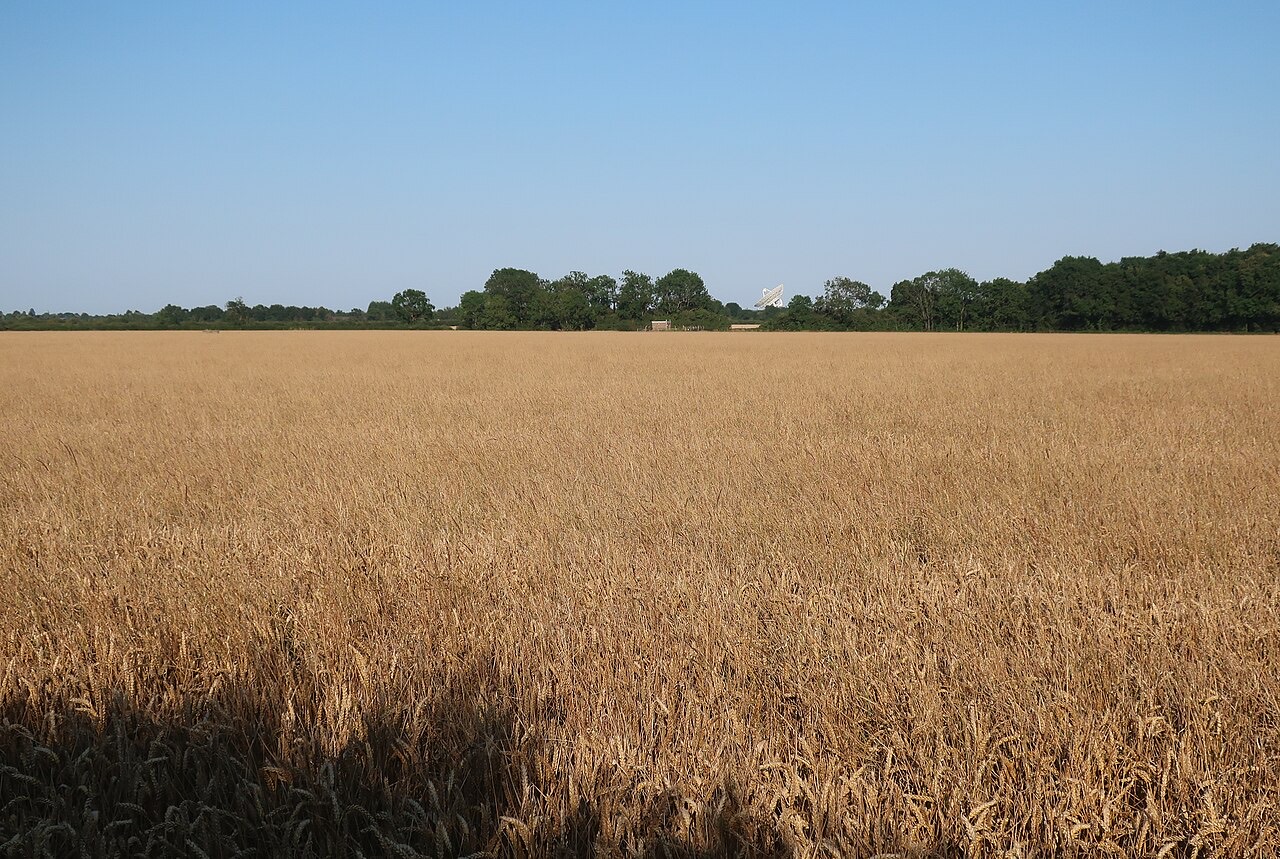
Wheat is one of the most widely cultivated cereal crops in the world and a staple food for a large share of the global population. Grown across temperate and semi-arid regions, it is valued for its adaptability, storability, and the versatility of its grain, which is milled into flour for bread, pasta, and many other foods.
Most cultivated wheat is either bread wheat (Triticum aestivum), used mainly for leavened bread and general flour, or durum wheat (Triticum durum), used mainly for pasta and semolina. Varieties are further divided into winter and spring types according to whether they require a period of cold (vernalization) to flower.
Overview
Wheat is a self-pollinating annual grass grown for its edible grain. Its global importance reflects a combination of broad climatic adaptability, established storage and milling infrastructure, and the functional properties of wheat gluten, which enable leavened bread and a wide range of processed products.
Production spans large commercial operations and smallholder systems. Because growing conditions differ so widely, agronomic details such as sowing dates, seeding rates, and input levels are highly region-specific and should be based on local recommendations.
Botanical classification
- Family
- Poaceae (grass family)
- Genus
- Triticum
- Principal species
- Triticum aestivum (hexaploid bread wheat) and Triticum durum (tetraploid durum wheat)
- Growth habit
- Tillering annual grass producing terminal spikes (ears) of grain
Origin and distribution
Wheat was among the first cereals domesticated in the Fertile Crescent of the Near East, and it spread across Europe, Asia, and North Africa over millennia before reaching the Americas and Oceania. Today it is grown on every inhabited continent, with major production in temperate regions of Asia, Europe, North America, and parts of the Southern Hemisphere.
National and regional statistics on area, production, and trade are compiled by bodies such as FAO and national statistical services. Figures change annually with weather and markets, so current values should be taken from those primary datasets rather than assumed.
Climate requirements
Wheat is adapted to cool-season growth. Winter wheat is sown in autumn, establishes before winter, and requires a period of cold to trigger flowering; spring wheat is sown after the coldest part of the year in regions where winters are too severe for autumn establishment.
Grain filling is sensitive to heat and drought. High temperatures during flowering and grain fill can reduce yield and quality, which is one reason variety choice and sowing timing are matched carefully to local climate.
Soil requirements
Wheat performs best on deep, well-drained, medium-textured soils such as loams and clay loams with good structure and moisture-holding capacity. It is generally grown on soils with near-neutral pH, though tolerance varies among varieties.
Establishment and crop management
Establishment depends on producing an even, well-anchored stand at the correct depth into a firm, moist seedbed. Sowing date, seeding rate, and row spacing are set locally according to variety, soil, and expected season length.
- Variety selection matched to winter/spring type, disease pressure, and end use
- Crop rotation to manage soil-borne diseases and weeds
- Seedbed preparation appropriate to the tillage system (conventional, reduced, or no-till)
- Timely weed management, as wheat competes poorly with weeds during early growth
Nutrient considerations
Nitrogen strongly influences both yield and grain protein, while phosphorus, potassium, and sulfur support establishment, root growth, and quality. Requirements depend on target yield, soil supply, previous crop, and residue management.
Water and irrigation
Wheat is grown both rain-fed and under irrigation. Water demand is highest around stem elongation, heading, and grain filling. In irrigated systems, scheduling aims to avoid stress at these sensitive stages while preventing waterlogging.
Crop water requirements are estimated from evapotranspiration and local climate; methods and reference data are published by FAO and national services.
Common diseases and pests
Wheat is affected by fungal diseases including powdery mildew, the rusts (leaf, stripe, and stem rust), Septoria leaf blotch, and Fusarium head blight, as well as by insect pests such as aphids, which can also transmit viruses. Pressure varies by region and season.
Management combines resistant varieties, rotation, monitoring, and — where justified — locally authorized control products used according to their labels.
Harvest
Wheat is harvested when the grain has matured and dried to a moisture content suitable for combining and safe storage. Harvest timing balances maximum yield and quality against the risk of losses from lodging, shattering, sprouting, or weather damage.
Uses
- Milling into flour for bread, pastries, and other baked goods
- Durum semolina for pasta and couscous
- Animal feed, including grain and by-products such as bran
- Industrial uses including starch and gluten, and use of straw as bedding or a soil amendment
Relationships
Evidence-backed connections in the knowledge graph.
Notable cultivars
Documented varieties tied to this species, with registry status and sources on each page. Not an exhaustive list.
- CadenzaCadenza is a United Kingdom spring bread wheat that has become one of the most widely used reference genotypes in wheat genetics, including a sequenced hexaploid TILLING mutant population developed for gene-function research.
- Chinese SpringChinese Spring is a landrace-derived bread wheat that became the standard genetic and cytogenetic reference line for wheat and was chosen for the first hexaploid bread wheat reference genome, released by the International Wheat Genome Sequencing Consortium in 2018.
- FielderFielder is a soft white spring bread wheat released by the University of Idaho in 1974 that is now used chiefly as a model genotype in wheat tissue culture and genetic transformation because it is unusually amenable to regeneration and transformation.
- KronosKronos is a United States durum wheat, grown as irrigated Desert Durum, that has become the standard tetraploid reference genotype in wheat genetics through a sequenced TILLING mutant population used to study gene function.
- Maris HuntsmanMaris Huntsman is a British winter bread wheat introduced in 1972 by the Plant Breeding Institute in Cambridge that became one of the most widely grown winter wheats in the United Kingdom during the 1970s.
- MarquisMarquis is a historic Canadian hard red spring bread wheat, selected in the early twentieth century for its early maturity and bread-baking quality, that became the dominant spring wheat of the North American plains and a foundation parent for later cultivars.
- Norin 10Norin 10 is a historic Japanese semi-dwarf bread wheat, registered in 1935, whose reduced-height alleles were later introduced to Western breeding programs and became foundational to the semi-dwarf wheats of the Green Revolution.
- SvevoSvevo is a modern Italian durum wheat grown for pasta whose genome was sequenced as a durum reference, providing a framework for studying the domestication and improvement of tetraploid wheat.
- Yecora RojoYecora Rojo is a CIMMYT-derived semi-dwarf hard red spring bread wheat released in 1975, adapted to hot, irrigated low-desert conditions and noted for its milling quality and characteristically high grain protein.
Harvested commodities
The traded commodities harvested from this crop. A commodity is the harvested lot, described by its own quality, grading, and storage evidence — not by the agronomy of the plant.
- Durum Wheat GrainDurum wheat grain is the harvested caryopsis of Triticum durum, a different species from common wheat and traded as its own commodity. Its hard, vitreous kernels are milled into semolina for pasta rather than into bread flour.
- Wheat GrainWheat grain is the harvested caryopsis of common wheat (Triticum aestivum), traded as a bulk cereal commodity and milled mainly into flour. It is classified commercially by class, moisture, protein, and soundness rather than by the agronomy of the growing crop.
Scope & limitations
Geographic scope: Global overview. Agronomic details (timing, rates, varieties) are region-specific and vary widely.
Climate context: Cool-season crop grown across temperate and semi-arid regions, rain-fed or irrigated.
- Sowing dates, seeding rates, and input levels are examples of region-specific decisions not covered by universal values here.
- Production statistics change annually and should be taken from primary datasets such as FAOSTAT.
Sources
This article draws on the following authoritative sources. See our sources & methodology for how they are selected.
- [1]FAO — Food and Agriculture Organization (opens in a new tab)Authoritative
Food and Agriculture Organization of the United Nations (FAO)
Cited for: Role of wheat in food systems and agronomy
- Type:
- Intergovernmental organization
- Jurisdiction:
- Global
- Accessed:
- 2026-07-12
- [2]FAOSTAT — FAO statistical database (opens in a new tab)Authoritative
Food and Agriculture Organization of the United Nations (FAO)
Cited for: Production, area, and trade statistics
- Type:
- Intergovernmental organization
- Jurisdiction:
- Global
- Accessed:
- 2026-07-12
- [3]CIMMYT — International Maize and Wheat Improvement Center (opens in a new tab)High
International Maize and Wheat Improvement Center (CIMMYT)
Cited for: Wheat improvement and agronomy research
- Type:
- Research institute
- Jurisdiction:
- Global
- Accessed:
- 2026-07-12
- [4]USDA ARS — Agricultural Research Service (opens in a new tab)Authoritative
USDA Agricultural Research Service (ARS)
Cited for: Wheat research and disease information
- Type:
- Government agency
- Jurisdiction:
- United States
- Accessed:
- 2026-07-12
- [5]AHDB — Agriculture and Horticulture Development Board (opens in a new tab)High
Agriculture and Horticulture Development Board (AHDB)
Cited for: Regional wheat agronomy and management
- Type:
- Government agency
- Jurisdiction:
- United Kingdom
- Accessed:
- 2026-07-12
- Authoritative
Cited for: Classification and nomenclature
- Type:
- Reference database
- Jurisdiction:
- United States
- Accessed:
- 2026-07-12
Related topics
Plant Diseases
Pests
Fertilizers
Soil Health
Machinery
Climate
Farming Systems
Irrigation
Post-Harvest
- Aerated Storage
- Batch Drying
- Bulk Bag (FIBC)
- Chilled Grain Storage
- Commercial Grain Silo
- Continuous-Flow Drying
- Farm Grain Bin
- Flat Storage Warehouse
- Grain Cleaning
- Grain Drying
- Grain Storage
- Hermetic Storage
- Moisture Content and Equilibrium
- Natural-Air and Low-Temperature Drying
- Silo Bag
- Sorting and Grading
- Storage Moulds and Mycotoxins
- Stored-Grain Insects
- Threshing and Shelling
- Winnowing
- Woven Polypropylene Sack